Escape from Playtime Bosses: Complete Guide & Strategies
Learn how every boss encounter works in Escape from Playtime. Full walkthrough tips, chase strategies, and survival tricks for all major bosses.
Getting caught by an Escape from Playtime boss usually means an instant jumpscare and a reload, which is exactly why understanding each encounter matters. These mascot-style horror games borrow heavily from the formula popularized by Poppy Playtime — towering toys, scripted chase sequences, and puzzle-gated escapes — and they punish players who run blindly through the dark. Whether you're facing your first conveyor-belt pursuer or a multi-stage finale, this guide to the Escape from Playtime bosses breaks down every major encounter type, the mechanics behind them, and the practical strategies that keep you alive.
Because Escape from Playtime is a smaller indie horror title, community reports and player experience make up much of what we know about its behavior patterns. We've combined those community observations with lessons drawn from similar bosses in the wider "toy factory horror" genre so you know exactly what to expect before the music swells.
How Escape from Playtime Boss Encounters Work
Before diving into individual fights, it helps to understand the design template these bosses follow. Almost every encounter in the game — and in sibling titles like Poppy Playtime — falls into one of four categories:
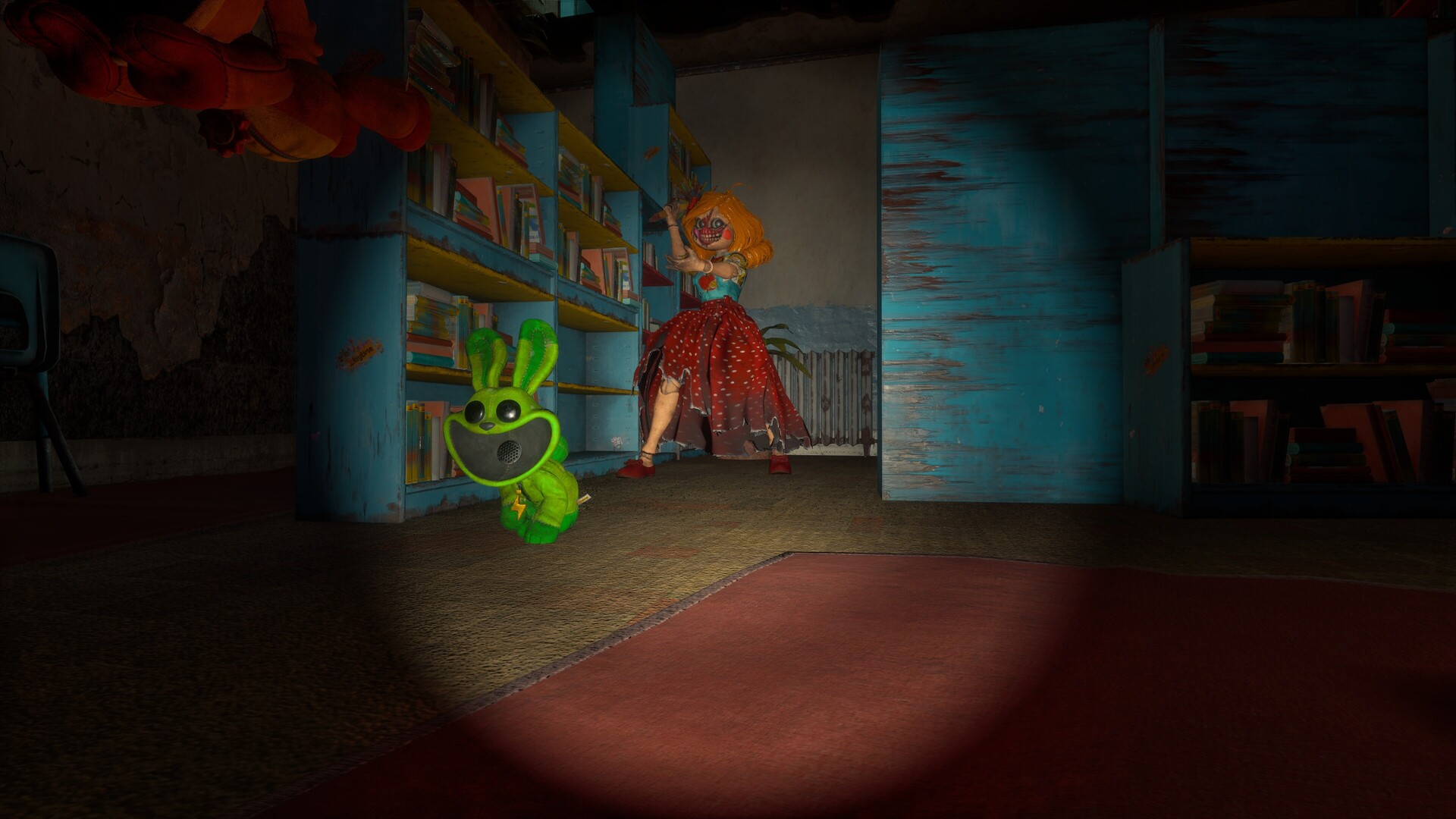
Official screenshot · Source: Steam store
| Encounter Type | How It Works | Your Goal | Difficulty |
|---|---|---|---|
| Scripted Chase | The boss mirrors or follows you through a fixed route | Keep moving, don't trip hazards | Easy–Medium |
| Hide-and-Seek | You must break line of sight or conceal yourself repeatedly | Hide before the timer ends | Medium |
| Minigame Gauntlet | A puzzle room doubles as a death trap if you fail | Complete the puzzle fast and clean | Medium |
| Weeping-Angel Stalker | The boss freezes when you look at it, moves when you don't | Manage glances while navigating | Hard |
Community reports suggest Escape from Playtime leans heavily on the first two categories: you'll spend most of the game being chased, not fighting. That means movement discipline — not combat skill — is your primary survival tool.
Every Boss in Escape from Playtime at a Glance
Here's a quick-reference table of the encounter types you'll face, modeled on the structure of similar genre bosses:
| Boss / Encounter | Stage | Chase Type | Key Mechanic | Common Fail Point |
|---|---|---|---|---|
| Opening Mascot Chase | Early | Scripted corridor sprint | Boss mirrors your path | Panicking and backtracking |
| Memory Minigame Trap | Mid | Failure = death | Memorize and repeat a color/pattern sequence | Rushing inputs under pressure |
| Whack-a-Mole Room | Mid | Multi-target reaction test | Push back targets poking out of holes | Ignoring one side of the room |
| Statue-Style Stalker | Mid | Red light/green light | Move only when it's safe | Moving while watched |
| Hide-and-Seek Finale | Late | Multi-stage hiding | Pull levers, then conceal yourself | Hiding too late |
Note that exact boss names and staging vary by game version; players on forums have reported minor updates shifting encounter order. The mechanics, however, remain consistent.
Boss 1: The Opening Chase — Don't Look Back
The game's first real boss encounter is a classic scripted chase. You complete a task (in genre terms, think of Poppy Playtime's Make-A-Friend sequence), a door unlocks, and something enormous comes out of the dark hallway behind you.
How to survive it:
- Never stop moving forward. These chases are scripted — the boss's speed is tuned so a walking player barely escapes. Stopping to look back costs you the buffer you need.
- Follow the pipes. In the Poppy Playtime Chapter 1 boss fight, the escape route runs through ventilation shafts and catwalks, ending when a toppled crate catches the pursuer and sends it falling into the factory depths. Escape from Playtime's opening follows the same beat: the environment kills the boss, not you.
- Learn the mirror trick. Several players report that early chases have pursuers who mimic your movements on a parallel track. If you slow down, it slows down. This is deliberate pacing, not a bug — use it to read the route ahead.
The jumpscare at the end of this sequence is one of the game's signature moments, and creators have showcased every jumpscare and the full ending in 4K playthroughs on YouTube if you want to preview what's coming.
Boss 2: Minigame Gauntlets — Where Most Players Die
Mid-game encounters shift from running to thinking under pressure. These rooms are "play or die" scenarios: complete the minigame correctly and you walk out; fail, and the mascot running the game ends you.
The Memory Game
A sequence of colors or symbols flashes on screens around you. Replicate it exactly using the buttons within reach. The difficulty ramps because the sequences get longer and the time between inputs shrinks.
| Round | Typical Sequence Length | Time Pressure | Pro Tip |
|---|---|---|---|
| 1 | 3–4 inputs | Generous | Say the colors out loud |
| 2 | 5–6 inputs | Moderate | Group colors into pairs |
| 3 | 7+ inputs | Tight | Commit only after the full sequence ends |
The Reaction Room
Eighteen holes line the walls, and targets pop out of them. Your GrabPack-style tool (or equivalent) snaps them back. Miss too many and it's game over. The winning approach is rhythmic scanning: left side, center, right side, repeat — rather than chasing the nearest target.
The Statue Game
Move only when it's safe; freeze when watched. Crucially, community reports note that the pursuer in this minigame can advance even while you're standing still, so it's a race, not just a patience test. The end of this sequence is often rigged by the game's story — expect the exit to be blocked and a chase to trigger regardless of how well you play.
Boss 3: The Hide-and-Seek Finale
The late-game set piece is the genre's signature: a countdown starts, you run, and then the stalker hunts you through a series of rooms. In Poppy Playtime's version, Mommy Long Legs counts down from ten, then pursues you through a Hidden Labyrinth where you must pull four colored levers and hide from her three separate times before reaching the emergency exit.
Your step-by-step survival plan:
- Move during the countdown. Distance gained now is safety later.
- Pull every lever immediately. Levers gate progression; hiding is meaningless until the next door opens.
- Hide before she arrives, not as she does. Listen for footsteps and voice lines — they telegraph each phase.
- Stay hidden until the coast is fully clear. Many players die because they peek early.
- Sprint the final corridor. The escape door is always timed; commit fully once it's in reach.
The ending of these sequences is usually environmental: in the reference boss fight, the pursuer's hand gets caught in a grinder and the player pulls the lever. Look for that pattern in Escape from Playtime — the kill switch is almost always a machine you control.
Universal Tips for Beating Every Boss
| Tip | Why It Works | Applies To |
|---|---|---|
| Play with headphones | Audio cues telegraph every chase start | All encounters |
| Walk, don't sprint, unless chased | Noise attracts stalkers in stealth segments | Hide-and-seek, stalking phases |
| Memorize the room before acting | Puzzle rooms punish fumbling under pressure | All minigames |
| Never backtrack in scripted chases | The route is one-way by design | Opening and finale chases |
| Watch a full playthrough first | Knowing the jumpscare timing removes panic deaths | Everything |
One more genre-wide truth: the flares, batteries, and tools you pick up mid-game almost always matter in the final fight. In Poppy Playtime Chapter 3, the CatNap encounter requires you to slot two batteries, endure nearly five minutes of hallucinations and close calls, then hit the boss with an overcharged Green Hand. If Escape from Playtime follows suit, hoard your tools — the finale will demand them.
Difficulty Comparison: Which Encounter Will Kill You Most?
Based on aggregated community reports across similar mascot-horror titles:
| Encounter | Estimated First-Try Death Rate* | Main Cause of Death |
|---|---|---|
| Opening chase | ~10% | Stopping to look back |
| Memory minigame | ~35% | Input panic in later rounds |
| Reaction room | ~30% | Tunnel vision on one side |
| Statue game | ~40% | Moving while watched |
| Hide-and-seek finale | ~50% | Hiding too late |
*Player experience estimates from community discussion — not official statistics.
The takeaway: the quiet, puzzle-based encounters are deadlier than the loud chase scenes. Slow down in the minigames. The game rewards composure far more than reflexes.
FAQ: Escape from Playtime Bosses
How many bosses are in Escape from Playtime? Player experience suggests around five major encounter types, mixing scripted chases, minigame traps, and a multi-stage hide-and-seek finale. Exact counts can shift with game updates.
What's the hardest Escape from Playtime boss to beat? Community reports consistently rank the statue-style stalker and the hide-and-seek finale as the toughest, since both punish hesitation and reward memorized routes.
Can you fight the Escape from Playtime bosses directly? No — like most games in this genre, including Poppy Playtime, the bosses are defeated through environmental traps and scripted sequences, not direct combat. Your tools exist to solve puzzles and trigger escapes.
Do the bosses get faster on higher difficulty or replays? Most community reports indicate boss speed is fixed and scripted. What changes on replay is your knowledge — which is why watching a full playthrough before your second attempt dramatically improves survival.
The Escape from Playtime bosses are scary the first time you meet them — and routine the fifth. Learn the patterns, keep your hands steady in the minigames, and let the factory's own machinery do the dirty work. Good luck down there.
Related Guides
Escape from Playtime age rating: parent content guide
No ESRB or PEGI age rating is listed for this horror co-op. See voice-chat risks, scare tone, and who it actually fits.
Escape from Playtime Beginner Guide: Tips & Basics
Learn the basics of Escape from Playtime — objectives, monsters, items, stamina, and escape routes in this complete beginner guide for new critters.
Escape from Playtime Ending Explained: How to Win Runs
Break down the Escape from Playtime ending, the final Boogie Bot escape sequence, quota system, and tips to survive your run and reach the top.
Escape from Playtime How to Play: Beginner's Survival Guide
Learn how to play Escape from Playtime — tribute goals, extraction loops, stamina, monsters, and solo vs co-op tips for surviving the factory.